Sentir Venezuela's 4th Anniversary Tribute

Sentir Venezuela
Is joy, passion,
lots of fun and
lots of love
It is discipline, devotion,
effort and teamwork.
It is Harp, Cuatro the Venezuelan guitar,

Maracas, Drums,
Violin, Clarinet and song.
It is Joropo, the national dance,
Afro Caribbean rhythms, like
Parrandas, Tambores

Venezuelan Gaitas, Calypso and Waltzes.

Sentir Venezuela
Has a golden voice and fiery dancers.
Latin flavour and spring fire.
It is watercolour.
Tricolour.
Our flag
yellow, blue and red.
In all its magnificence.

It is a maple leaf that fervently dances in the snow
Dressed in white, purifying the air
It is the dance with no end in the summer.

It is North, South, East and West.
It is Caribbean, Amazonas, Andes and Llanos.
The kind Canadian provinces and the Venezuelans states.
Strong Maracaibo, the bridge and Bolivar brave.
Caracas and its Avila Mountain, Coro and plateau Barquisimeto

Hot Maracay, Valencia and its people.
Is the dunes, the Morro and more mountains.
The jungle smell, orchid and placid Lagoon.
It is the tears of a nostalgic Goddess.
Tears of joyous memories and of mixed feelings.

It is dawn and dusk.
A woman who dances with inner pride.

It is community.
Family.
Friendship,
Music and Dancing

It is photography, culture and flavour.
It is a dream come true.
Hope, future,
roots, branches and nuances.
It is a free flowing movement.
Without borders, without limits
From far away, it feels home is near.
It is the sentiment of a country without fear.

Carla Soto

10 Venezuelan Women Icons

During this year’s iteration of International Women’s Month, we want to celebrate those Venezuelan women who, because of their imaginative, strong, creative, and combative character, have long stood out.

 
Many women have not only influenced our own culture but have crossed borders and won international recognition for their human and artistic achievements. We would need many pages and long hours to describe them all. Here, we introduce 10 Venezuelan icons.


1) Teresa Carreño

Born in Caracas in 1852, she began her professional career at an early age in New York, eventually joining the ranks of our greatest concert pianists and composers. She was one of the most accomplished pianists of the 19th and 20th Century, while also challenging the conservative social morés then in effect by enduring several divorces during a difficult time for women. She once performed in the White House for President Abraham Lincoln himself.

Carreño was also among the first soloists of the Berlin Philharmonic Orchestra in 1889 and performed on many important international stages in North America, New Zealand, Europe, South Africa and Australia. She died in 1917. In 1983, the Teresa Carreño Cultural Complex was opened in Caracas and is now considered the foremost theatre in Venezuela.


2) Teresa de la Parra

Born in 1889, she was a Venezuelan journalist and writer of French heritage, now ranked as among the most important Venezuelan novelists of the first half of the 20th century, along with Rómulo Gallegos. She was also among the first Venezuelan writers to win critical recognition outside her country. Her two novels, Iphigenia and Memories of Mama Blanca, were widely read in France and Spain and throughout Latin America and won her enduring fame.

In Iphigenia, de la Parra explored notions of feminism in Venezuela for what was possibly the first time, telling the dramatic story of a woman struggling against a society that denied her a voice of her own, confining women to the traditional roles of wife and mother. Memories of Mama Blanca, meanwhile, is an elegy to her childhood and personal life. She died in Madrid in 1936.


3) Yolanda Moreno

Born in Caracas in 1936, she has been one of the leading dancers and choreographers of her time, winning fame as an ambassador of Venezuelan folk dance. She is now known unofficially as “The dancer of the Venezuelan people.”
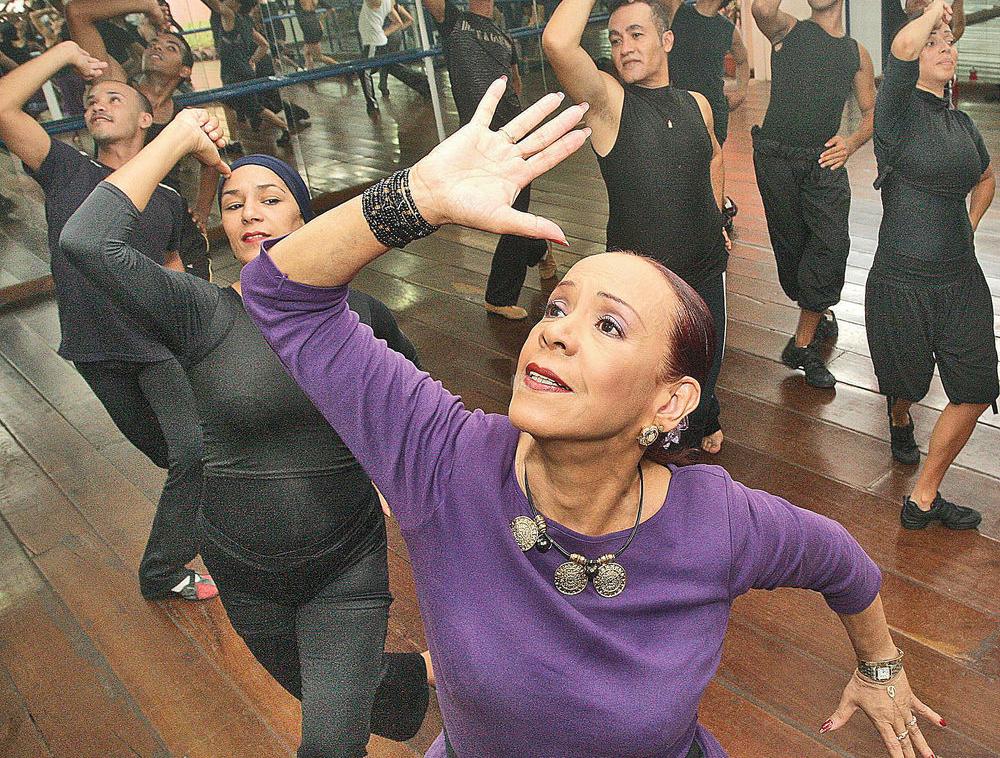
Along with her husband Manuel Rodríguez Cárdenas, she founded the Venezuelan Dance Association in 1962 and came to be considered one of the most influential artists in Venezuela, thanks in large measure to her performances on important stages around the world. We has fostered international respect for our folk dances while, she has been a source of inspiration for Sentir Venezuela.


4) Carolina Herrera

Born in 1939 in Caracas, Herrera comes from a family that taught her to value high-fashion designs, so it was no surprise that she became an entrepreneur and fashion designer. Her wit and creativity vaulted her to the forefront in her field, and her work has highlighted the world of Venezuelan fashion.

In 1981 she founded her own company and mounted her first fashion show, displaying good taste, refinement, and elegance. It didn’t exactly hurt that she won a commission to design Caroline Kennedy’s wedding dress, after having already worked as the personal designer for Jackie Kennedy. In 1986, she launched her brand “Carolina Herrera,” a line of products for both women and men, ranging from perfumes to footwear and accessories.


5) Soledad Bravo

Born in 1943 of Spanish origin, she is among the most emblematic and prolific singers in Venezuela. Bravo has recorded more than 20 albums, including original songs as well as compilations of important Venezuelan artists. She began as a soloist, combining protest music with traditional Venezuelan styles that she further enriched with influences from jazz and salsa, among others. She has worked with great international artists, including Willie Colón, Ray Barreto, Joaquín Sabina and Rubén Blades, among others.


6) María Teresa Chacín

Born in Caracas in 1945, she is one of the leading Venezuelan proponents of Latin American folkloric and romantic music. She has recorded more than 50 albums with important Venezuelan musicians, including Juan Vicente Torrealba and Chelique Sarabia. She has also collaborated with Chelique Sarabia. She has also collaborated with the Mexican composer Armando Manzanero.

Among other accolades, she won the Venezuelan Voz de Oro Award and became the first Venezuelan singer to win a Latin Grammy (Best Children’s Music Album, for María Teresa Canta Cuentos).  She has represented her country by appearing on stages in Colombia, Puerto Rico, Buenos Aires, Washington, and New York. In 1976 she recorded an album in London, England with the London Symphony Orchestra, under the direction of Aldemaro Romero.


7) Zhandra Rodríguez

Born in Caracas in 1947, she followed her career as a ballet dancer by founding the International Ballet of Caracas and also helped to establish and direct the New World Ballet of Caracas. Rodríguez is recognized now as the Prima Ballerina of Venezuela. When she was fifteen years old she became part of the National Ballet of Venezuela, soon becoming one of the principal dancers. Later, she danced for the American Ballet Theater in Caracas and decided to continue her professional career in that company, playing most of the main roles of the classical ballets.

In 1974 she returned to Venezuela and together with Vicente Nebrada, María Cristina Anzola, and Elías Pérez Borjas founded the International Ballet of Caracas, a company that soon attracted great international prestige. She has been invited to dance leading roles in international dance companies such as the National Ballet of Cuba and the Ballet of the Berlin Opera, among others.


8 ) Gabriela Montero

Born in Caracas in 1970, she has been described as “a woman prodigy in the classical piano,” thanks to her masterful concerts, distinguished by their improvisation, dexterity, and virtuosity.
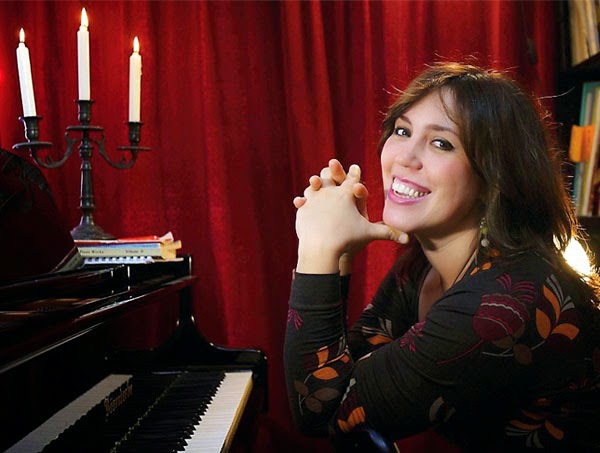
In the first years of her artistic career, she was a soloist in the Venezuelan Youth Orchestra “Simón Bolívar.” After receiving a scholarship, she moved to the United States to continue her music studies. She has performed as a soloist with some of the world’s leading orchestras, including the New York Philharmonic, the Boston Philharmonic, and the NDR in Hanover.


9) Patricia Velásquez

Born in 1971 in Maracaibo in the Venezuelan Guajira, she won fame as a supermodel before launching a career in acting. Her mother comes from the indigenous Wayúu tribe that straddles the border between Colombia and Venezuela, while her father is mestizo. She began her artistic career in dance but won even greater attention in 1989 when she participated in the Miss Venezuela beauty pageant, representing the Peninsula Guajira, an achievement that brought her international recognition.

As a professional model, she stood out on the catwalks of Milan, Paris and New York. In 2002, she created the Wayúu Tayá Foundation, a non-profit organization dedicated to assisting the Wayúu and helping to sustain their culture and traditions. On May 20, 2009, she received recognition in New York from both the Women Together Committee and the UN for her humanitarian work.


10) Betsayda Machado

Born in El Clavo, a town in the Barlovento region, she is a Venezuelan singer with deep African roots that extend far into Venezuelan history. Machado has recently made herself known to the world, as “the voice of Venezuela.” She has spent most of her life in the town of her birth, as a singer and member of the band La Parranda de El Clavo.
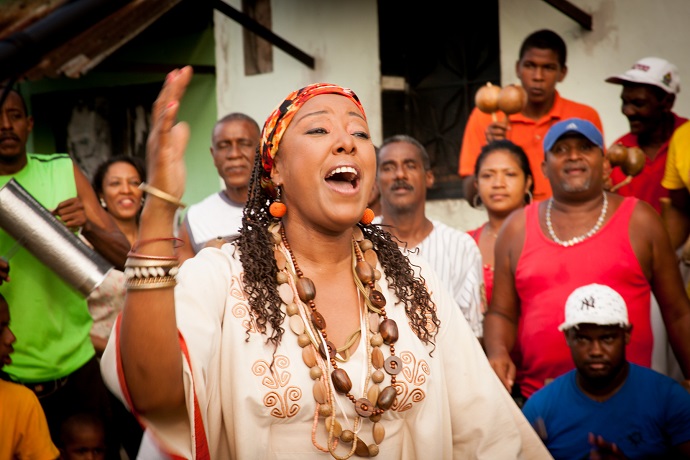
Thanks to her voice, her presence, and her artistry, she has aroused far-reaching interest in Tambores, an Afro-Venezuelan musical genre. After her U.S. debut in New York in January 2017, The New York Times sought out Betsayda and Parranda for an interview. Last year, Betsayda celebrated the 30th anniversary of the group with a series of concerts in different North American cities. Toronto had the good fortune to meet her and to dance to the pulsating rhythms of her band.

Author: Carla Soto

Translation and editing by Oakland Ross

Images:

  1. http://www.gustavopierral.net/?p=20958
  2. http://ceolnasidhe.blogspot.com/2014/08/gabriela-montero-brahms-piano-concerto.html
  3. http://southernexposurearts.org/artists/betsayda-machado-la-parranda-el-clavo-venezuela/


Venezuelan African Roots

When speaking of Venezuelan culture, it’s impossible to ignore the country’s African roots.

During Spanish colonial times in the sixteenth and seventeenth centuries, the arrival of African slaves meant injustice and misery for them, but it also heralded the arrival of African culture and traditions, expressed in cookery, music, crafts, dances, and religious practices.

We have Africans to thank for many aspects of our unique Venezuelan reality, a blend of at least three different cultures: the indigenous, the European, and the African. Venezuela was especially enriched by a trove of cultural practices and traditions that came to us from what are now Angola, Guinea, Guinea-Bissau, and the Congo, the ancestral homes of our
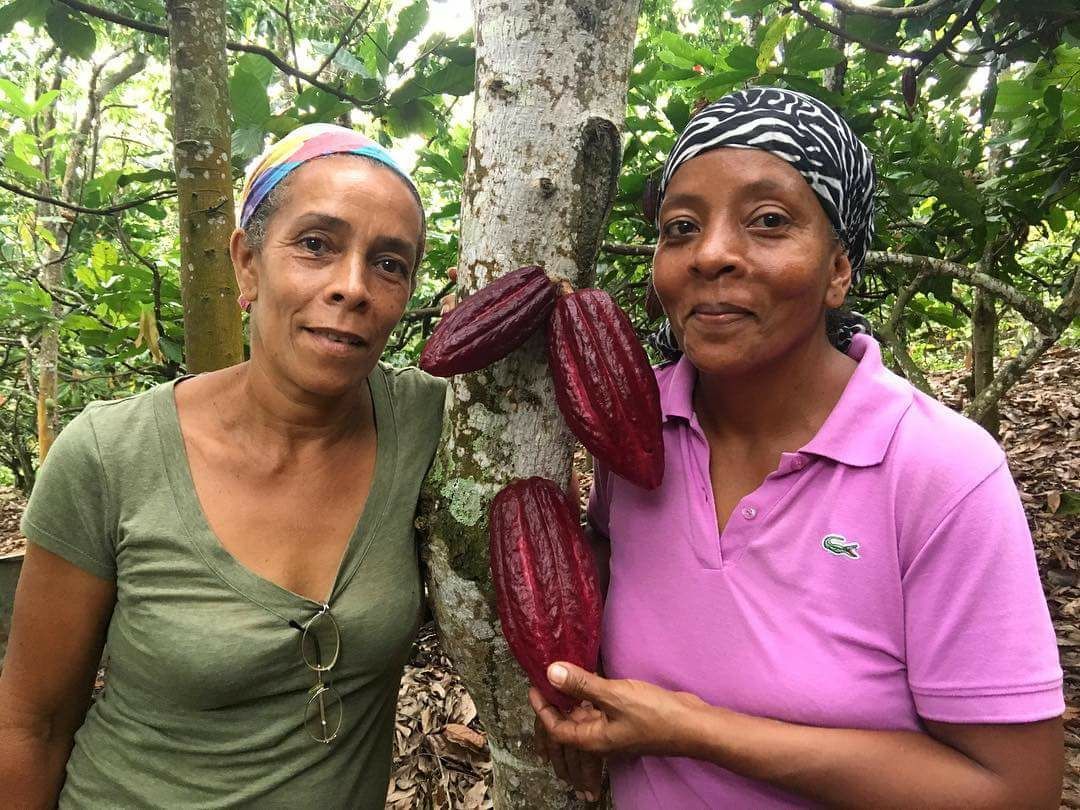
earliest African arrivals. Meanwhile, because Africans tended to be less susceptible to European diseases than the indigenous population, they soon found themselves forced to undertake the most arduous work, particularly the cultivation of cocoa.

Foto taken by Maria Victoria Mata – Project “Cacao Lament” (1)
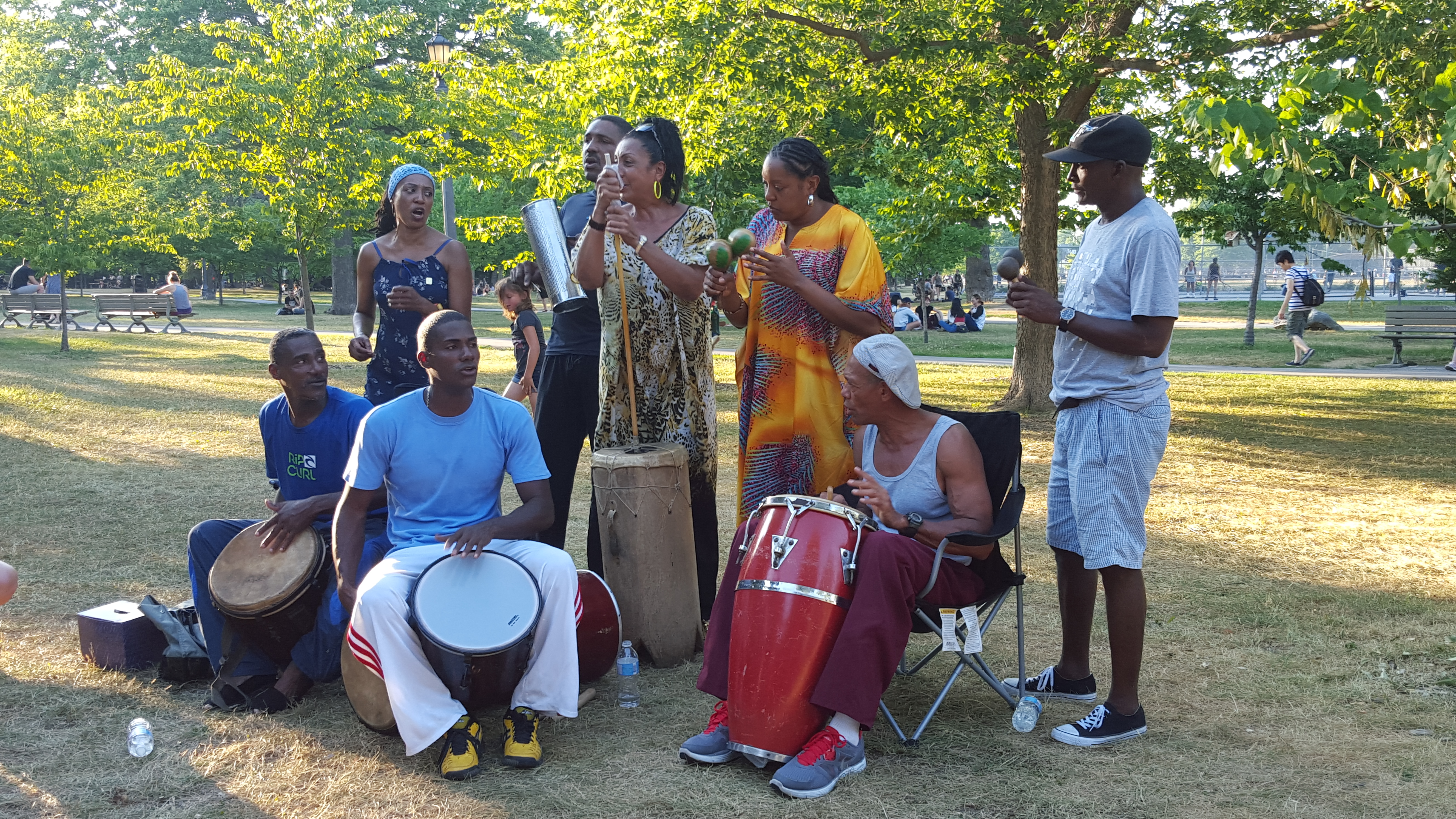
The Africans’ rituals, music, and dances allowed them to maintain something of their traditional lives and customs and also helped them to withstand their new lives of injustice and abuse by providing a physical and psychological shield against the horrors of slavery.
In Brazil, a martial art called Capoeira was developing, in the form of a dance that served as protection and resistance against the Spanish colonizers. Meanwhile, a musical style called Tambores (Drums) was taking root in Venezuela. It’s an Afro-Caribbean musical form that began to flourish in the northern coastal areas of the country, with rhythms that
originated in the African Congo. Thanks in large part to these musical forms, Africans could console themselves amid their pains and sorrows, conspire against the Spaniards, and even win the hearts of their intended lovers. Particularly in Barlovento, a town in Miranda state very close to Caracas, these African traditions remain authentic and alive today, sustaining a culture that is at once ancient and contemporary.


During the colonial epoch, Catholic missionaries from Europe sought to implement a more peaceful form of colonization, using the tenets and practices of Catholicism to entice and subdue the indigenous and African people. This process of religious conversion also aided in the development of new syncretic faiths that mixed European and African roots, involving obedience to Catholic saints that were also perceived as African gods. Santerismo is merely the largest of these hybrid religions. On one level, Africans were converted to Catholicism, but at the same time they were able to remain faithful to their own myths and gods.

Even today, huge numbers of Venezuelans continue to celebrate these Afro-Catholic religions, with festivals organized in many towns, often as part of the country’s Summer Solstice Festivities, characterized by the tropical heat in what is the traditional season of fertility. The most important of these celebrations include the Callao Carnival, the Saint John-the-Baptist Festival, the Cross of May, the Devil Dancers of Yare and the Corpus Christi, among many others.

Simón Bolívar, the great Latin American liberator, tried for years to abolish slavery in South America. For him, the struggle for the region’s independence entailed liberty and equality not just for some but for all — for creoles, mulattoes, indigenous people, and blacks. They were all part of the free and united Venezuela he had long dreamed about. Thanks to the support of African slaves, Venezuela gained its independence in 1810. But it was not until March 24, 1854, during the presidency of José Gregorio Monagas, that slavery was abolished in Venezuela, which thereby became one of the first Hispanic countries to abandon the sordid and demeaning practice, along with Peru and Argentina.

During the celebration of African American History Month, we want to pay tribute to those of our people blessed with African roots and to give thanks for their invaluable legacy, one that continues to enrich Venezuelan culture today, in a land of steadfast people with a character at once powerful and passionate — a nation of artists, creators, musicians, and dancers whose abundant energy resonates in the use of African masks and in the timeless rhythms of our African drums, thebumbac, puya, and cumaco.

Author: Carla Soto
Translation and editing by Oakland Ross

Images:

(1) Photo taken by Maria Victoria Mata (@Colibrydorado) – Director and Creator of Project in Development “Cacao Lament”. Place: Merida, Venezuela

– Francis Gotopo

Tercer Aniversario de Sentir Venezuela!

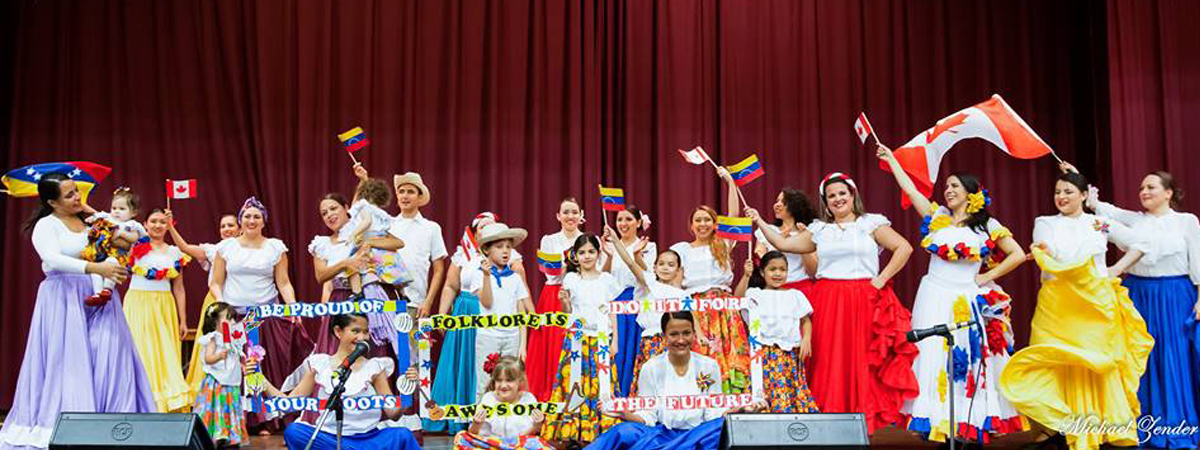
Este año celebramos nuestro 3er aniversario y el pasado 2 de Septiembre lo celebramos en el escenario del festival Hispanic Fiesta con mucha emoción y orgullo de representar a nuestra Venezuela en Toronto!

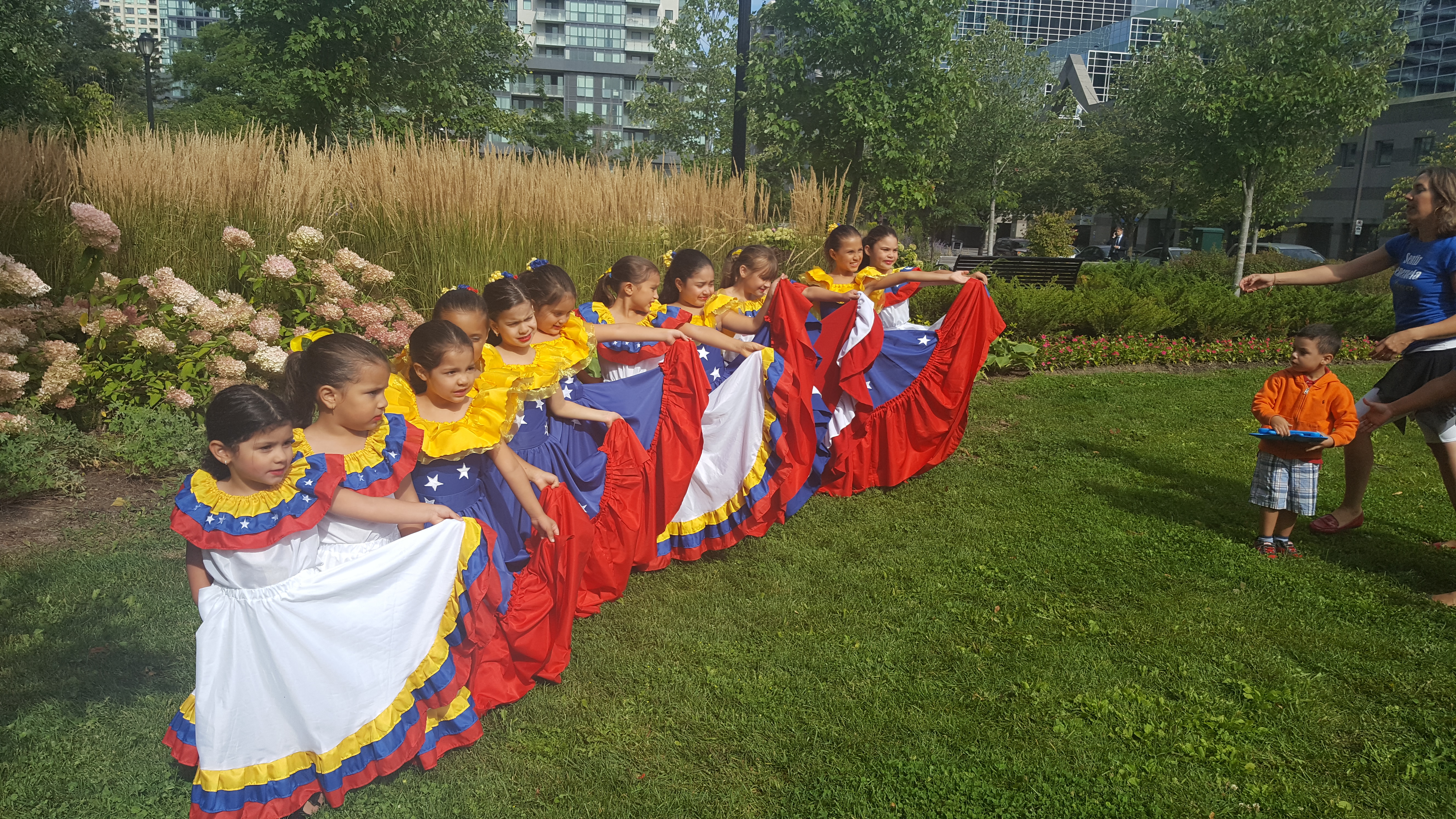
Nuestros bailarines infantiles de los talleres de Toronto y Mississauga se vistieron de tricolor y su mejor sonrisa para bailar el Mono de Caicara y el Alma Llanera. Lo hicieron espectacular!! Felicitaciones!!
Y a sus maestras Sonny Carmona y Fabiola Sanchez De Guedez

Gracias a nuestros patrocinantes incondicionales Luis Briceño, ITrading Cargo y Guillermo Lehr, por su confianza y su vital apoyo.

Gracias a Uds nuestros seguidores y amigos por estar siempre con nosotros y apoyarnos con sus aplausos y donaciones.

Gracias a nuestros bailarines infantiles. Por Uds y para Uds nuestro esfuerzo! Para mostrarles lo bello de sus raíces Venezolanas. Gracias a todos los Padres por su apoyo

Gracias a nuestros musicos: Jose Javier Blanco Mendez (Director), YJ Josephine, Erez Cedar, Jesus Galdona, Giovanna Galuppo por estar siempre presente, engalanarnos con su talento y hacernos vibrar en cada presentación en vivo y ahora con la nueva cancion “Popurrí Venezuela” una bella produccion de Erez y con mucho amor y talento de Jose Javier, Y y Erez.

Gracias a nuestro super fotografo Michael Zender por capturar nuestra pasion por el baile y Venezuela.

Y por ultimo gracias a todos nuestros bailarines/voluntarios por su amor, entrega y compromiso: Yhessika Bonnin, Sonny Carmona, Reillys Rojas, Jessica Lima Junguittu , Jess Chacin, Fabiola Sanchez De Guedez, Sarai Martinez De Otty, Camila Ramirez Verhooks, Maria Luisa Schotborgh N , Maria Jose Vicuna Castillo, Michelle Selvaggi, Sinai Castro, Noemi Gutierrez, Caroll Simmons, Anderson Javier Bracho Sieveret, Maribel Gomez Rojas, Francis Gotopo y gracias a todos nuestros familiares por apoyarnos.

Somos resultado de un bello equipo! Esperamos seguir contando con el apoyo de Uds, nuestra comunidad para seguir creciendo!!

Somos Sentir Venezuela!! ????

Sígannos @SentirVzla en Facebook e Instagram

Si quieres pertenecer a esta familia de SV como patrocinante, voluntario, bailarín o en nuestros talleres infantiles por comenzar en Octubre escríbenos a sentirvenezuelabaile@gmail.com

SEGUNDO ANIVERSARIO DE SENTIR VENEZUELA

SV-rotator (1)

Sentir Venezuela celebra su Segundo Aniversario

ENTRADAS A LA VENTA AQUI

Sentir Venezuela se prepara para celebrar su 2do Aniversario, con el júbilo y el deseo de mostrar la ideosincracia del venezolano. Para ello estamos organizado una tarde llanera en familia donde podran disfrutar de: música en vivo del folklore Venezolano, juegos tradicionales y piñata para los niños, torneo de dominó, comidas típicas, el show de Sentir Venezuela y mucho más.

La celebración se realizará el próximo Sábado 6 de Agosto, entre las 12m-5pm, en 374 Sheppard Avenue East, Toronto, ON M2N 3B6, cerca de la estación Bayview, con estacionamiento gratis.

Los invitamos y esperamos que nos acompañen, para compartir en familia y apoyar nuestra misión  de mostrar a nuestros hijos y jovenes sus raices, difundir nuestra cultura en Toronto y Canada. Además podran contribuir con el crecimiento de nuestra organización sin fines de lucro Sentir Venezuela,  colaborar con el vestuario 2017  y en esta oportunidad realizar una contribución fraternal mediante el acopio y envío de medicinas a Venezuela.

Corran la voz!  Su presencia y apoyo es muy Valioso! Los Esperamos!

Compra tu entrada aqui: https://www.eventbrite.com/e/sentir-venezuela-2do-aniversario-tickets-26431402035


THE DEVIL DANCERS OF VENEZUELA

Language, tradition, dance, ritual, religion

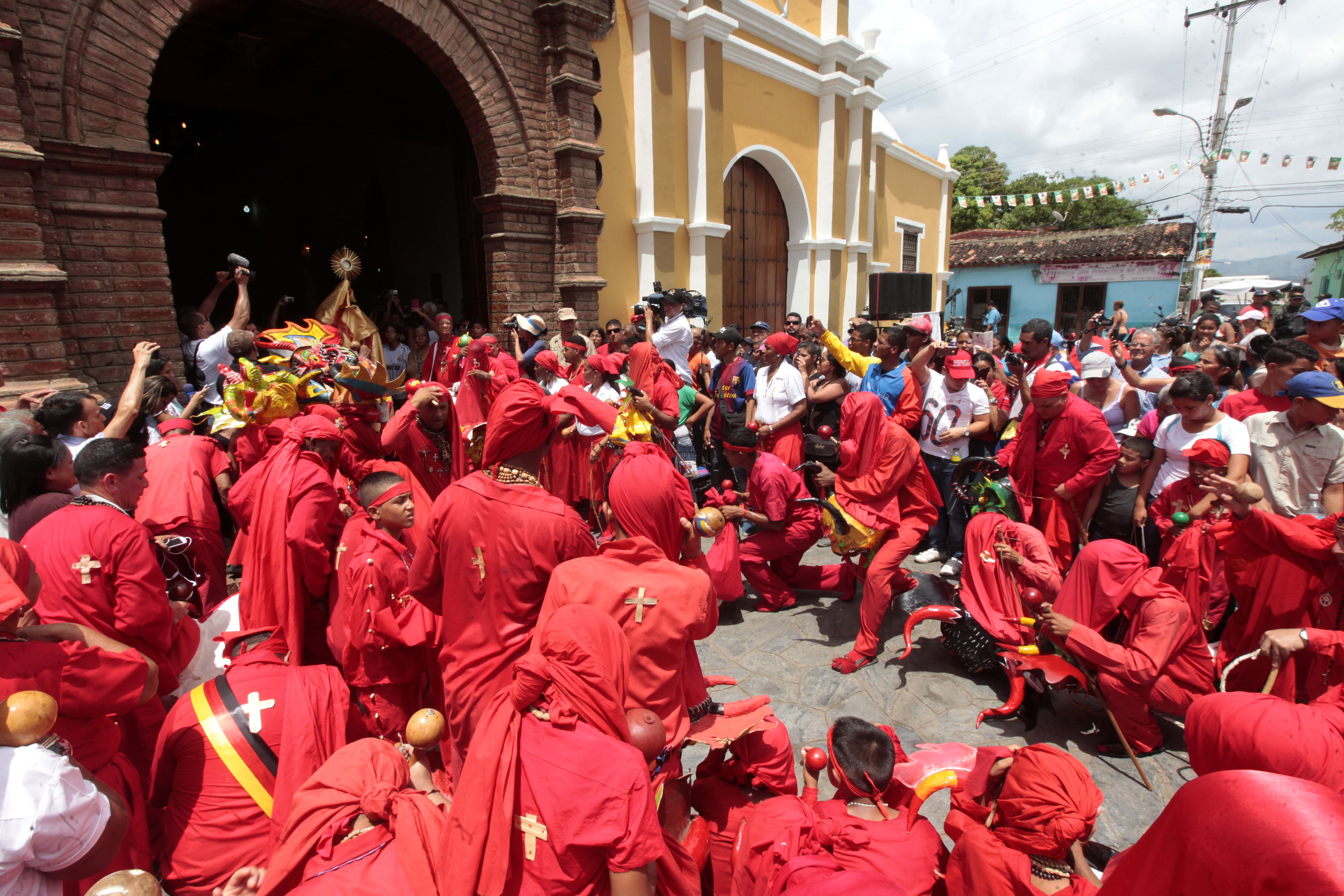
Today The Devil Dancers festivity is celebrated in some of the coastal towns in Venezuela, as grounds of Corpus Christi Catholic festivity. This is one of the Venezuelan oldest, religious, cultural and artistic manifestations. They were recognized by UNESCO as Intangible Cultural Heritage in 2012. Nowadays there are 11 official brotherhoods recognised internationally. They belong to the towns of San Francisco de Yare, Cata, de Patanemo, San Millán, Ocumare, Naiguatá, among others.

DSC_7323aa [1600x1200]

The Venezuelan writer Juan Liscano (1915-2001) was the one who best to describe this festivity, known as “Diablada”.

‘San Francisco de Yare was part of a country that was not transformed by the oil industry… The modesty of their celebration reflected the modesty of their customs; they were used to live in shortage.

One Thursday in June 1947…a group of people from the National Folk Searching Service travelled to this town close to Caracas…San Francisco de Yare… where they celebrate Corpus Christi Day with a devil dancing festivity… Their peaceful faces, measured gestures and organised actions became turbulent by a strong a temporal wind… They were covered in fascinating devil masks, dressing all in red, who were dancing to the rhythm of one drum in front of the gate of the church, as if they were possessed.

For the third time, the bells rang to call the people of the town to attend the solemn mass; the devils were barging at one of the corners of the main square, following the rhythm of the drum and getting closer to the church. They were around 80 participants, dressed in red and on their shoulders they were wearing a palm cross. Their masks had horns. On their waist a rosary hangs as a belt…They had a maraca on their right hand and they were waving it.

The astonish courtship went to the gate of the church and stopped there dancing until the mass started. Then, they devil dancers vanished on the floor and they contracted themselves as if they were in pain. They tried to get up to start dancing again, but vanished once again. They try to get closer, but could not reach the altar. After a while they formed 2 rows and kneeled. Then two tall devils wearing bigger masks with 3 horns moved forward they were the Boss of the’ Diablada’ and his helper. All the symbolism of the dancing was based on the cross…. And in their symbolic representation of the duality in between the good and evil fight…the dancing became desperate and faster. Dancers were exaggerating and intensifying their movements. Meanwhile, the priest reached the altar and raised the Corpus Chirsti figure. The devil dancers were surrounded and started doing their final journey.

mg_1511_rh1433374185

When the mass was finished, the Boss and the entire devil dancers started walking and dancing through the town”

El lenguaje de los Diablos. Banesco contigo Publisher. Pgs. 115 to 125.

Author: Carla Soto

Images:

  • http://losdiablosdeyare.blogspot.ca/
  • http://albaciudad.org/2015/06/en-fotos-las-mascaras-de-tradicion-acompanan-a-los-diablos-danzantes-de-yare-en-su-danzar/